
Table of Contents
- Why Hand Dyed Bohemian Clothing Needs Special Care
- Prepare Your Hand Dyed Garments Before the First Wash
- Hand Washing vs Machine Washing Hand Dyed Fabrics
- Best Detergent for Delicate Hand Dyed Fabrics
- Water Temperature and Washing Technique
- How to Fix Color Bleeding in Clothes
- Air Drying Bohemian Clothing Tips
- Stain Removal on Hand Dyed Items
- Frequently Asked Questions
Last Updated: August 31, 2026
Why Hand Dyed Bohemian Clothing Needs Special Care
Hand dyed bohemian clothing isn't like mass-produced apparel. Each piece carries unique character, but that individuality requires special care. Hand dyed fabrics, especially those created with natural dyes, have different fiber structures and dye bonds than synthetically dyed textiles. Colors sit differently on the fabric and are more vulnerable to fading, bleeding, and damage from harsh treatments. A standard wash cycle with hot water and conventional detergent can strip away months of craftsmanship in a single load.
Natural dyes bond to fibers differently than synthetic alternatives and are more susceptible to color migration, where dye molecules move from one fiber to another in the presence of moisture, agitation, or heat. This is why washing hand dyed bohemian clothing requires deliberate technique. The investment you make in these pieces deserves protection; they're meant to become softer and more authentically you with time.
Prepare Your Hand Dyed Garments Before the First Wash
Jumping straight into washing is a mistake. Hand dyed bohemian clothing needs preparation before it ever touches water.
Separating colors to prevent bleeding
The most common disaster happens when multiple hand dyed pieces are washed together without checking colorfastness. Red bleeds onto white. Purple migrates to cream. Suddenly your collection looks muddy.
Separate items by color intensity and undertone. Deep jewel tones should be washed separately from lighter shades. Warm colors can bleed differently than cool colors. New hand dyed pieces are highest risk, they should never share a wash with anything else during their first three washes.
Testing for colorfastness
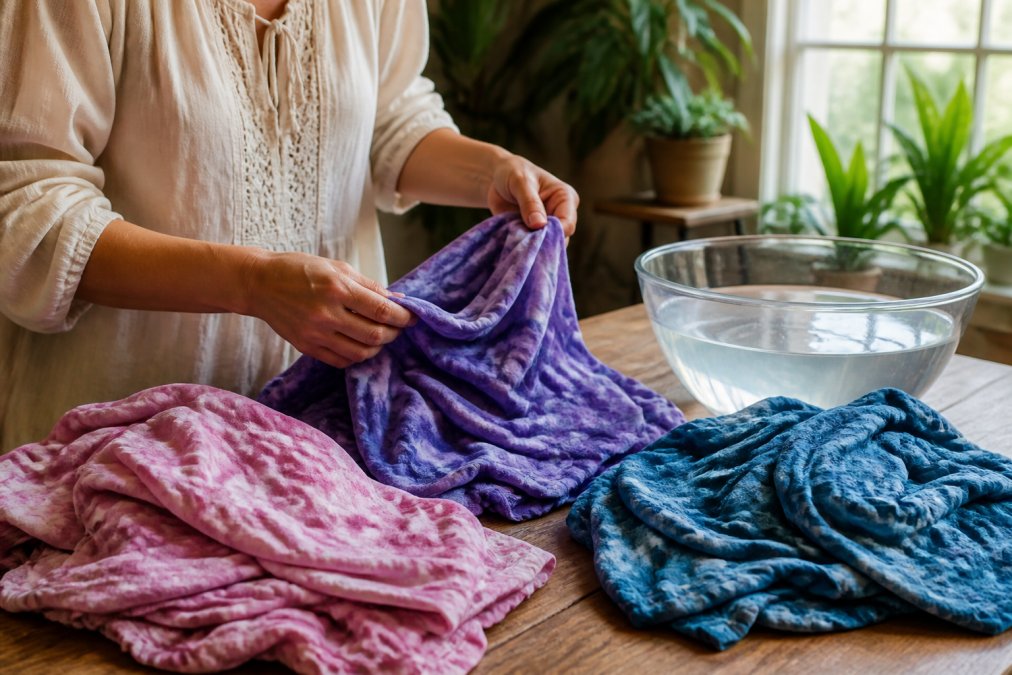
Before committing to a full wash, test whether your piece is colorfast. Fill a small bowl with cold water and add a drop of gentle soap. Submerge a small, hidden corner, the inside of a seam works perfectly, for two minutes. Check the water. If it's deeply colored and the fabric has faded noticeably, you're dealing with a piece that will bleed significantly. If the water shows only slight discoloration, you have better colorfastness.
A piece that shows heavy bleeding needs even gentler treatment: shorter soak times, colder water, and separate washing for at least five washes.
Hand Washing vs Machine Washing Hand Dyed Fabrics
The question isn't "should I hand wash or machine wash?" It's "what does this specific piece need?"
When to hand wash
Hand wash is the gold standard for hand dyed bohemian clothing, especially during the first five washes. Hand washing gives you complete control over temperature, agitation, and soak time.
Hand wash any piece that is brand new and untested, shows heavy bleeding, is made from delicate fibers like rayon or linen, has embellishments, or is a favorite you want to preserve for years.
Fill a basin with cold water and add a small amount of pH neutral detergent. Submerge your garment and gently agitate for two to three minutes. Let it soak for five to ten minutes without agitation. Rinse repeatedly in fresh cold water until the rinse water runs clear. Gently squeeze out excess water, never wring or twist.
When machine washing is acceptable
After five washes, many hand dyed pieces stabilize. At this point, machine washing becomes an option, but with strict conditions: use the delicate cycle exclusively, set water temperature to cold, add only a small amount of pH neutral detergent, and wash alone or with other hand dyed pieces of similar color.
Even with these precautions, hand washing remains the safer choice for long-term color preservation. Pieces with delicate construction, embellishments, or made from naturally delicate fibers should stick with hand washing indefinitely.
Best Detergent for Delicate Hand Dyed Fabrics
The wrong detergent can destroy hand dyed bohemian clothing faster than any washing technique.
Why pH neutral detergent matters
Hand dyed fabrics, especially those colored with natural dyes, are sensitive to pH levels. Conventional laundry detergents are alkaline, which can strip color from fibers and cause dye molecules to release prematurely. pH neutral detergent maintains the balance of the fiber and dye bond, cleaning without disrupting the delicate chemistry.
Look for detergents specifically labeled as pH neutral or designed for delicate fabrics. Castile soaps are an excellent choice, they're plant-based, gentle, and naturally pH balanced. Loving Life Clothing recommends products like our Bergamot + Lemon Liquid Hand Soap, which uses pure plant-based Castile soap without artificial preservatives at $15.

Alternatives include specialized wool wash, silk wash, or delicate fabric detergents from reputable makers. If the label doesn't mention pH, don't use it on hand dyed pieces.
Avoiding bleach and harsh chemicals
Bleach is the enemy of hand dyed bohemian clothing. Even diluted bleach can strip color completely or create uneven fading. Never use bleach on hand dyed pieces.
The same rule applies to oxygen-based cleaners, color-catcher products, and fabric softeners. Stick to simple, gentle ingredients: water, pH neutral soap, and time. For stubborn stains, a longer soak with a small amount of pH neutral detergent works better than harsh additives.
Water Temperature and Washing Technique
Temperature matters profoundly. Cold water is non-negotiable for how to wash hand dyed bohemian clothing. Warm or hot water accelerates dye release, increases color bleeding, and can set stains permanently.
Cold water washing for color preservation
Always use cold water, ideally below 65 degrees Fahrenheit. Cold water slows dye molecule movement, reduces color bleeding, and minimizes the risk of setting stains. This is true for every hand dyed piece, every time, with no exceptions.
Cold water works efficiently with pH neutral soap and removes dirt, sweat, and environmental grime without requiring heat.
Gentle soaking and minimal agitation
Agitation is what causes color bleeding and fiber damage. Instead of aggressive washing, use gentle soaking. Submerge your hand dyed bohemian clothing in cold water with pH neutral detergent and let it sit for five to ten minutes without movement.
After soaking, gently swish the garment through the water for two to three minutes. Use your hands to move it slowly, not rub it. Avoid bunching, wringing, or folding the fabric repeatedly.
When rinsing, repeat the gentle approach. Move the garment slowly through fresh cold water at least three times, or until the water runs completely clear. The entire washing process should take 15-20 minutes.
How to Fix Color Bleeding in Clothes
Even with perfect technique, color bleeding happens. If you notice it immediately while the garment is still wet, act fast. Rinse the affected piece in cold water repeatedly until the excess dye is gone. Don't let it dry.
For light color bleeding, a cold water soak with pH neutral detergent for 30 minutes can help lift some migrated dye. Gently agitate the garment, then rinse thoroughly. If the bleeding is heavy or has already dried, your options narrow. Sometimes the best approach is acceptance, the piece now has character and history.
Air Drying Bohemian Clothing Tips
How you dry hand dyed bohemian clothing is just as important as how you wash it.
Shade drying to prevent sun damage
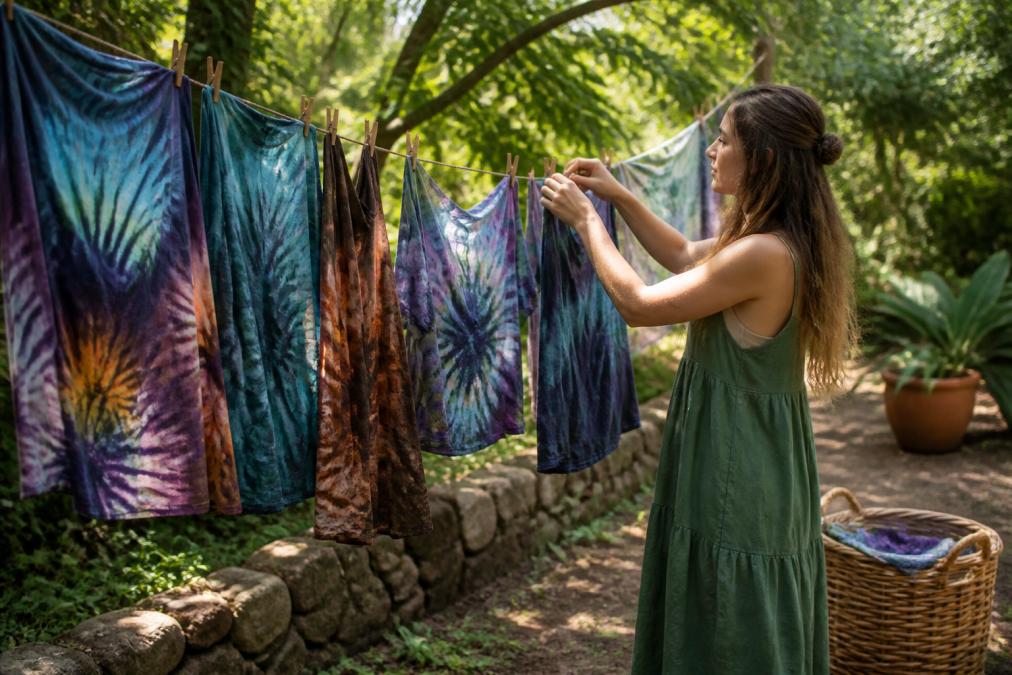
Never dry hand dyed bohemian clothing in direct sunlight. UV rays fade hand dyed colors faster than almost any other factor. Instead, dry your pieces in shade, on a clothesline in a shaded area or laid flat on a clean towel indoors. A covered porch, garage, or shaded backyard works perfectly.
Shade drying takes longer, typically 4-8 hours depending on humidity and air movement, but it preserves color that direct sun would fade. Avoid areas near heating vents or radiators.
Ironing and heat settings for hand dyed fabrics
Once dry, you might need to address wrinkles. Use the lowest heat setting on your iron and test on a hidden area first. Steam is gentler than dry heat for hand dyed fabrics. A steamer or steam iron on low setting can remove wrinkles without the risk of scorching or affecting dye.
Never use high heat on hand dyed clothing. Use the minimum heat necessary, and when in doubt, skip ironing altogether.
Stain Removal on Hand Dyed Items
Stains on hand dyed bohemian clothing require a different approach than conventional fabrics. The first rule: act quickly, but gently. Fresh stains are easier to address, but rushing into harsh chemicals makes things worse.
For most stains, start with cold water. Blot the stain, don't rub. Rubbing works the stain deeper into fibers and can damage the dye. For oily stains, a tiny amount of pH neutral detergent on a damp cloth can help, but use sparingly.
Avoid commercial stain removers, bleach-based products, and oxygen cleaners on hand dyed pieces. These can create permanent damage or bleached spots far worse than the original stain. A faint stain is infinitely better than a chemical burn. Sometimes acceptance is the best option, a stain becomes part of the piece's story.
Protecting hand dyed bohemian clothing comes down to understanding that these pieces are fundamentally different from conventional garments. They require intention, patience, and a willingness to slow down. At Loving Life Clothing, we create hand dyed pieces designed to last, but only if you treat them with care. Start with pH neutral detergent like our White Sage + Lavender Liquid Hand Soap or Citrus Agave Liquid Hand Soap, both $15, follow the cold water and gentle technique guidelines, and your bohemian wardrobe will reward you with years of vibrant color and authentic character.


| Washing Step | Best Practice | Why It Matters |
|---|---|---|
| Pre-wash test | Cold water, 2 minutes, hidden area | Determines colorfastness and bleeding risk |
| Color separation | Group by intensity and undertone | Prevents color migration between pieces |
| Water temperature | Always cold (below 65°F) | Minimizes dye release and color bleeding |
| Detergent choice | pH neutral only | Preserves dye bonds and fiber integrity |
| Agitation | Gentle swishing, no rubbing | Reduces fiber damage and color loss |
| Rinse cycles | Minimum 3 times until clear | Removes detergent residue completely |
| Drying method | Shade air dry, never direct sun | Prevents UV fading and color loss |
| Heat application | Lowest setting with pressing cloth | Avoids scorching and permanent wrinkles |
According to textile care guidelines from the Smithsonian Institution, gentle handling and cold water are the foundation of preserving dyed fabrics over time. Research from the American Textile Chemists and Colorists confirms that pH neutral detergents significantly reduce color bleeding in hand dyed textiles compared to conventional laundry products. For specific guidance on natural fiber care, the Textile Fiber Products Identification Act enforced by the FTC requires accurate fiber content labeling, which helps you understand what your bohemian piece is made from and adjust care accordingly.
Frequently Asked Questions
How do I wash hand dyed clothing without fading the colors?
Use cold water, a pH neutral detergent, and hand wash whenever possible to minimize agitation. Avoid bleach and harsh chemicals entirely. Separate colors to prevent color bleeding, and always air dry in shade rather than direct sunlight. These steps preserve colorfastness and maintain the vibrant hues that make hand dyed fabrics special.
Can I use regular detergent on hand dyed bohemian fabrics?
Regular detergents often contain harsh chemicals and high pH levels that strip color from hand dyed textiles. Instead, choose a pH neutral detergent specifically formulated for delicate fabrics. Plant-based Castile soaps like our Bergamot + Lemon or White Sage + Lavender liquid hand soaps work well for gentle cleansing without damaging dyes. These preserve fiber integrity while removing dirt effectively without artificial preservatives.
What should I do if color bleeding happens after I've already washed my clothes?
If color bleeding occurs, immediately separate the affected garments and rinse them in cold water. For clothes already stained by color migration, soak them in cold water with a mild detergent for several hours, then rinse repeatedly until the water runs clear. Avoid heat and direct sunlight during this process. Prevention through proper color separation is more effective than fixing bleeding after the fact.
Is hand washing or machine washing better for hand dyed clothing?
Hand washing is ideal for hand dyed bohemian clothing because it minimizes agitation and gives you control over water temperature and detergent strength. If you must use a machine, select the delicate cycle with cold water and reduce the spin speed. Hand washing is especially important for the first few washes when dyes are still setting and color bleeding risk is highest. Once garments are established, gentle machine washing on delicate cycles becomes acceptable for everyday items.
This article was written using GrandRanker