
Table of Contents
- What You'll Need Before You Start
- Understanding the USDA Organic Seal and What It Means
- How to Search the USDA Organic Integrity Database
- Step-by-Step: Verifying a Product's Organic Certification
- How to Spot Fake Organic Labels and Fraudulent Claims
- Understanding Organic Labeling Levels and What They Mean
- The Role of Accredited Certifying Agents in Verification
- Common Mistakes to Avoid When Verifying Certifications
- Frequently Asked Questions
Last Updated: September 2, 2026
What You'll Need Before You Start
Gather the product packaging and access to the internet. A smartphone or computer to search the USDA Organic Integrity Database is ideal. If checking multiple products, keep a simple checklist to track your progress. Understanding how to verify organic certifications transforms shopping from guesswork into confidence-backed decisions.
The verification process is straightforward and takes just minutes per product. You don't need special training or technical skills, only knowing where to look and what details to match. This guide walks you through each step, from recognizing legitimate seals to spotting red flags that signal fraudulent claims.
Understanding the USDA Organic Seal and What It Means
The USDA organic seal represents a standardized guarantee that a product meets specific federal requirements and has undergone third-party verification. The seal features the word "USDA" with "organic" in green lettering on a white background.
The seal doesn't mean a product is 100% organic unless it explicitly states so. Products labeled "Organic" must contain at least 95% organic ingredients by weight (usda.gov). This distinction matters when verifying products with multiple components.

The seal indicates that an accredited certifying agent has inspected the product and verified that producers follow organic production standards, maintain proper documentation, and keep detailed supply chain records. Without this third-party verification, the "organic" claim would be unverified marketing.
One common misconception is that the USDA seal guarantees nutritional superiority or safety. The seal certifies production methods and ingredient sourcing, not nutritional content or food safety beyond standard requirements.
How to Search the USDA Organic Integrity Database
The USDA Organic Integrity Database is your primary verification tool. This free, searchable database contains records of all certified organic operations in the country. Visit the official USDA website and navigate to the Organic Integrity Database search portal.
Enter the company name from the product packaging. The database returns detailed results showing the operation's certification status, the accredited certifying agent, and the scope of their certification. You'll see whether the operation is currently certified or if their certification has lapsed, and what specific products or categories they're certified to produce.
Cross-reference the certifying agent listed in the database with the name on the product packaging. If these don't match, investigate further. The certifying agent is responsible for ongoing compliance audits and documentation review.

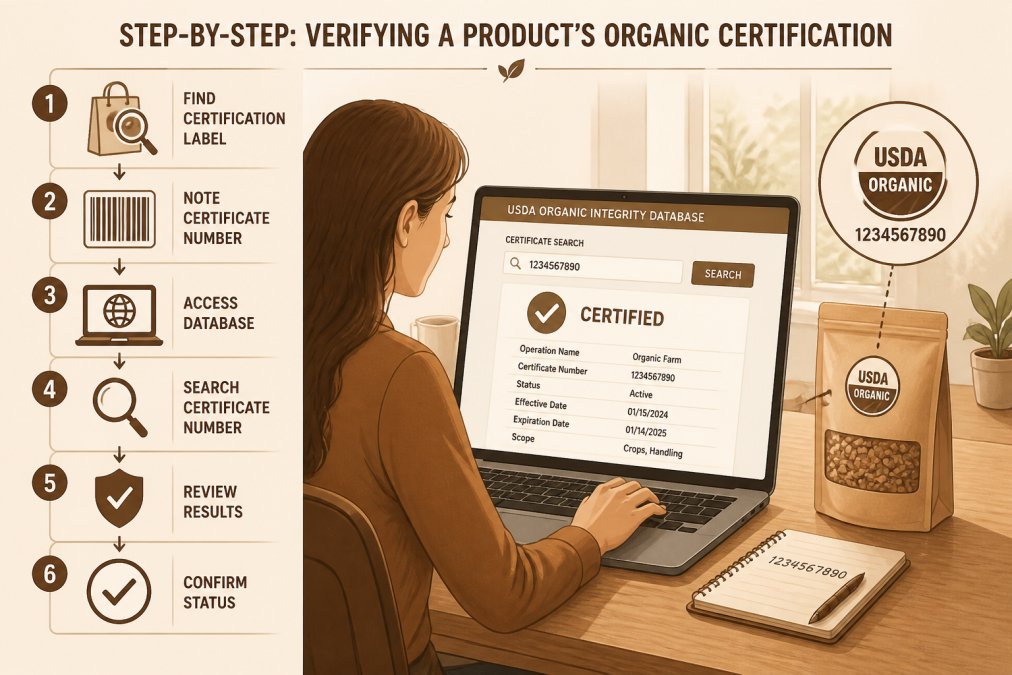
Step-by-Step: Verifying a Product's Organic Certification
Step 1: Check for the USDA Organic Seal
Examine the product packaging for the USDA organic seal. It features distinctive green and white coloring and appears on the front or back of the package. If absent, the product either isn't certified organic or the manufacturer chose not to display it.
Legitimate seals are crisp, properly proportioned, and clearly visible. Blurry, distorted, or oddly-sized seals are warning signs. Compare the seal on the package with official USDA examples to ensure it matches exactly.
Check the label for "Certified Organic" language. Terms like "Organically Grown" don't carry the same regulatory weight. Only the official seal represents verified, accredited third-party verification.
Step 2: Find the Certifying Agent Name
Locate the certifying agent's name on the packaging, typically on the back label in small print. The certifying agent is the accredited organization responsible for verifying organic standards compliance. Write down the exact name as it appears on the label.
Step 3: Search the Database
Open the USDA Organic Integrity Database and enter the company or operation name from the product label. The search is flexible, so you don't need exact spelling. Review results carefully and cross-reference location information to identify the correct operation.
Once you've found the correct operation, note the certification status. It should read "Certified" for currently valid certifications. "Suspended" or "Revoked" status means the product should not carry the USDA seal.
Step 4: Verify the Certificate Status
Confirm that the certifying agent name in the database matches the name on the product packaging. This alignment is essential. If they differ, contact the certifier listed in the database to clarify.
Check the certification scope to confirm it includes the specific product category you're verifying. An operation certified for fresh produce only might not legitimately certify dried products.

Note the date of the most recent inspection. Current certifications are maintained through annual inspections and documentation review. Recent audit dates indicate active compliance monitoring.
How to Spot Fake Organic Labels and Fraudulent Claims
The most obvious red flag is a missing USDA seal. Any product claiming organic status without the official seal is making an unverified claim. Some products use alternative seals or logos that look official but aren't recognized by federal regulations.
Look for vague language that mimics organic claims. Terms like "natural," "eco-friendly," "sustainably grown," or "pesticide-free" sound organic but aren't standardized or verified. Only the USDA organic seal represents verified, audited compliance.
Examine the certifying agent name carefully. If it's misspelled, oddly named, or unfamiliar, search for it in the USDA database. Fraudulent operations sometimes create official-sounding certifier names that don't actually exist.
Check the ingredient list against the organic claim. Organic products can't contain synthetic pesticides, artificial additives, or genetically modified organisms. If the ingredient list contradicts the organic label, that's a clear fraud indicator.
Legitimately certified organic products cost more than conventional alternatives because certification and compliance are expensive. Significant price discrepancies warrant investigation.
Purchase from established retailers with reputation protection incentives. These businesses verify supplier credentials more thoroughly than small operators.
Understanding Organic Labeling Levels and What They Mean
"100% Organic" means every ingredient is certified organic. These products display the USDA seal prominently.
"Organic" requires at least 95% organic ingredients by weight (excluding water and salt). The remaining 5% can include approved non-organic ingredients. These products also display the USDA seal and represent the most common labeling category for processed foods.

"Made with Organic" must contain at least 70% organic ingredients (usda.gov). These products can list up to three organic ingredients on the front label but cannot display the USDA seal. This category includes many packaged foods with multiple components.
Products with less than 70% organic ingredients cannot make organic claims on the front label. They may list specific organic ingredients in the ingredient list but cannot claim organic status overall.
The labeling level affects your verification process. For 100% Organic and Organic products, the entire operation must be certified. For "Made with Organic" products, specific ingredients must be certified, but the operation itself might not be.
The Role of Accredited Certifying Agents in Verification
Accredited certifying agents are the backbone of organic certification credibility. These independent organizations conduct inspections, review documentation, and verify compliance with National Organic Program standards. Without certifying agents, organic claims would be unverified marketing language.
The USDA accredits certifying agents through a rigorous process (usda.gov). These agents must demonstrate expertise in organic production, maintain detailed records, conduct annual inspections, and follow strict protocols. Not every organization can become an accredited certifier.
When you verify certifications, the certifying agent's name tells you who conducted the verification. You can research the certifier independently to understand their reputation and scope. Some certifiers specialize in specific product categories, while others handle broad operations.
Certifying agents maintain detailed audit trails and conduct unannounced inspections, review supply chain records, and verify that operations maintain organic integrity throughout production. This ongoing oversight prevents fraud and ensures compliance.
The certifying agent also handles complaints and violations. If an operation violates organic standards, the certifier investigates and can suspend or revoke certification. This enforcement mechanism protects the integrity of the organic label.
Common Mistakes to Avoid When Verifying Certifications
Don't assume that any seal or organic-sounding language means a product is certified. Always verify through the official USDA database rather than trusting labels alone.
Don't confuse "organic" with "natural" or "sustainable." These terms mean different things. Only organic certification guarantees specific compliance with federal standards.
Always verify the certification scope. An operation might be certified organic for vegetables but not for processed foods. Confirm the scope includes the specific product category you're verifying.
Check that the certifying agent name in the database matches the label. This mismatch could indicate a labeling error, supply chain change, or potential fraud.
Check the certification status field explicitly. It should clearly state "Certified" for currently valid certifications.
Examine the ingredient list against the organic claim. Cross-referencing the label with your understanding of organic production helps catch discrepancies.
Verifying organic food certifications protects your health and ensures your spending aligns with your values. The process takes minutes but provides confidence that you're purchasing what you think you are. At Loving Life Clothing, we understand that conscious consumers want to know exactly what they're buying, whether that's our hand-dyed bohemian apparel or the organic food offerings we curate. Our commitment to transparency extends to helping you navigate the verification process so you can make informed choices. Start by checking the USDA Organic Integrity Database for any product claiming organic status, and you'll quickly develop the skills to spot legitimate certifications and fraudulent claims. When you combine verified organic products with mindful purchasing habits, you're supporting a lifestyle that celebrates authenticity and conscious living.
Frequently Asked Questions
How do I verify if something is actually certified organic?
Look for the USDA organic seal on the product label, then search the USDA Organic Integrity Database using the certifying agent's name. The database lists all accredited certifiers and certified operations. You can search by company name, operation name, or certifying agent to confirm the product's certification status. This is the most reliable way to verify organic claims directly from the regulatory source.
What does the USDA organic seal mean for consumers?
The USDA organic seal indicates that a product meets strict federal standards set by the National Organic Program. It means the product was produced without synthetic pesticides, fertilizers, antibiotics, or GMOs, and was verified by an accredited certifying agent through regular audits. The seal is a guarantee that the product has undergone third-party verification and compliance review, not just a marketing claim.
How can I spot fake organic labels?
Fake organic labels often lack the official USDA organic seal or use vague terms like 'natural,' 'eco-friendly,' or 'all-natural', which are unregulated. Check the label for the certifying agent's name and look it up in the USDA Organic Integrity Database. If the name isn't listed or the database shows no certification, it's fraudulent. Also be wary of products claiming '100% organic' without the seal or unclear ingredient sourcing.
Can I look up a farm's organic certification status online?
Yes, the USDA Organic Integrity Database allows you to search by farm or operation name, certifying agent, or location. Simply visit the database, enter the operation name, and you'll see its certification status, scope of certification, and certifying agent details. This transparency helps you verify that the farm producing your organic food is actually accredited and compliant with National Organic Program standards.
This article was written using GrandRanker